Harris v. Trump: What's at Stake for Families?
Two weeks remain until Election Day, and early voting has begun in many states. If it hasn’t opened yet in your area, it may this week. You can check your state’s schedule here.
When deciding who to vote for, there’s a lot to weigh. It’s tough, but we do our best to sift through it. Below, I've included information on where the candidates stand on key issues affecting parents and families: paid leave, childcare, and child tax credits.
FIRST, QUICK HITS
THE CONSUMER PRODUCT SAFETY COMMISSION (CPSC) and Consumer Reports are urging a ban on baby walkers, citing that they still pose a significant danger to children despite updated safety features. Between 2004 and 2008, thousands of injuries and at least eight deaths were linked to these devices.
In 2018, the American Academy of Pediatrics (AAP) also called for a ban, with some doctors arguing that baby walkers not only fail to help children learn to walk but may actually delay their development. Canada has already banned baby walkers, doing so in 2004. Stationary activity seats and "push" walkers, however, are still considered safe alternatives.
INFANT SUPPORT CUSHIONS will now be required to meet federal safety standards, according to the CPSC. The agency reports being aware of 79 deaths and at least 124 injuries—mostly involving infants under three months old—between 2010 and 2022.

SHOULD CHILDREN BE PROTECTED FROM from being used for content on social media platforms? TODAY looks at a growing problem, especially now that many children of content creators are grown and sharing how their public experiences impacted their childhood.
THE USDA SAYS HUNDREDS of schools may have been sent meat contaminated with listeria that is now being recalled. No illnesses have been reported yet. You can find out if your school was impacted here.
THE WASHINGTON POST'S DEEP DIVE into Idaho's teen consent laws is a must-read for several reasons. Idaho is just one example of where these laws are in effect—but they could soon be in your state. It's crucial for parents to stay informed and involved. After all, it's far harder to undo a law you didn't know was coming than it is to prevent one from passing in the first place.
At the core of this issue are complex questions: What rights do parents have? What rights do children have? And how much control should parents have over their children's lives? It's far from the black-and-white issue many assume.
For example, should an abusive parent still have access to their child's medical records, including mental health and therapy information? And should children be allowed gender affirming care without their parents' consent?
ELECTION 2024: WHAT'S AT STAKE?
Before we get to the candidates, let's talk about you.
Earlier this year, U.S. Surgeon General Dr. Vivek Murthy sounded the alarm on parents’ stress levels, saying:
"Something has to change. It begins with fundamentally shifting how we value parenting, recognizing that the work of raising a child is crucial to the health and well-being of all society.”
The daily grind, concerns about kids’ health and safety, and the overwhelming pressure of social media weigh heavily on parents. But the biggest strain? Money.
Sixty-six percent of parents worry about finances compared to 39% of other adults. This concern is exacerbated by soaring childcare costs over the last decade alongside skyrocketing housing and grocery prices.
Murthy called for a 360-degree approach, urging everyone—neighbors, lawmakers—to provide “tangible support” to parents while emphasizing that the government should enhance family support programs.
THE GOOD NEWS: FAMILY POLICIES GET THE SPOTLIGHT
“Both Harris-Walz and Trump-Vance — all four of these sides — have some history of doing work on paid leave and pro-family policy in ways that we haven’t really seen in a suite of candidates, and that, in of itself, is really exciting,” said Adrienne Schweer, a fellow at the Bipartisan Policy Center. “Regardless of who wins, we’re going to have a ticket that has a history of thinking about paid leave and pro-family policy.”
For decades, Republicans campaigned on overturning Roe v. Wade, using “pro-life” as their banner for family values. That rallying point worked—until 2022 when Trump’s Supreme Court appointees helped overturn Roe v. Wade, ending the constitutional right to abortion. Republicans celebrated this victory; however, the subsequent midterm elections served as a harsh wake-up call. Without Roe v. Wade as a rallying cry, their base lacked motivation while enraged Democrats turned out in force, leading to surprising victories for the party in power.
 Harry Enten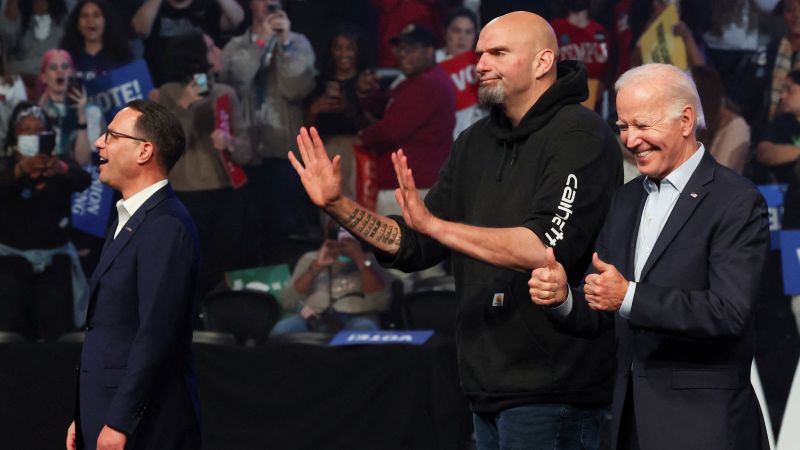
Family values remain central to their identity but faced scrutiny; ironically, after children are born, Republicans often show less concern for their welfare. Historically opposed to government aid for the poor—including food assistance programs for children and expanding child tax credits—Republicans argue that such initiatives create dependency. Most Republican voters share this belief, viewing government aid as harmful rather than beneficial due to its cost to taxpayers.
“As a party, I think we come across like a-holes sometimes on women’s issues,” noted Rep. Nancy Mace (R-SC).
Now, some Republicans – including Vance – concede that the party needs to pay attention to family issues. When asked how he proposed to solve the nation's childcare shortage, Vance told CBS News: "Unfortunately, we're going to have to spend more money."
On the other hand, while Democrats generally favor social programs aimed at supporting families, they have struggled to unite around specific legislation. Their fragile coalition means a single lawmaker can derail legislation. Joe Manchin’s blockade of paid leave legislation exemplifies this challenge.
PAID LEAVE: THE U.S. EXCEPTION
The U.S. stands out as one of only seven countries without national paid leave among wealthy nations; other countries like the UK spend four times more on this benefit than the U.S. Both parties support paid leave in theory but clash over funding methods. Democrats advocate for new taxes to fund federal programs while Republicans prefer tax breaks for businesses offering leave or allowing workers access to retirement savings.
During his first term, Trump signed a bill granting federal worker paid leave—pushed by his daughter Ivanka—then a senior presidential advisor --in exchange for Democratic support for his Space Force initiative.
“Paid leave is not mentioned in the GOP platform. And though a tax package enacted under Trump expanded the child tax credit, cuts elsewhere meant families’ tax burden remained mostly the same.” - Politico
Harris co-sponsored the Family Act aiming for 12 weeks of family and medical leave funded by payroll taxes but had to scale back the proposal to four weeks due to Senate opposition led by Manchin.
According to The 19th, 12 weeks is “far less than what most other countries have offered their workers for decades.” Worldwide averages show paid maternity leave at 29 weeks and paid paternity leave at 16 weeks.
In Minnesota, Tim Walz has enacted some of the most generous family benefits in the country: parents receive a $1,750 tax credit per child annually and will offer 12 weeks paid leave beginning in 2026.
CHILDCARE COSTS & ACCESSIBILITY
“Paid leave policies can reduce gender inequity, racial inequity, economic inequity while increasing prosperity for everyone." – Indivar Dutta-Gupta from the Center for Law and Social Policy.
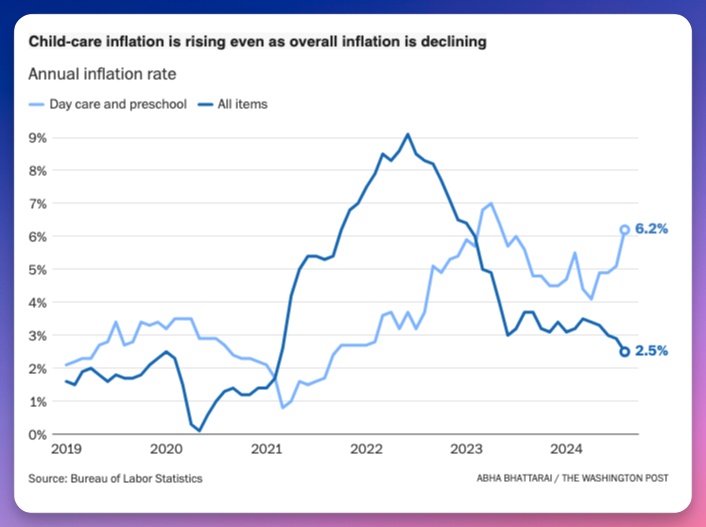
The cost of childcare has surged by 263% over the past three decades—almost double inflation rates during that time frame.
Last year, The 19th contacted every member of Congress regarding federal childcare policy; only five Republicans responded compared to 142 Democrats.
 Chabeli Carrazana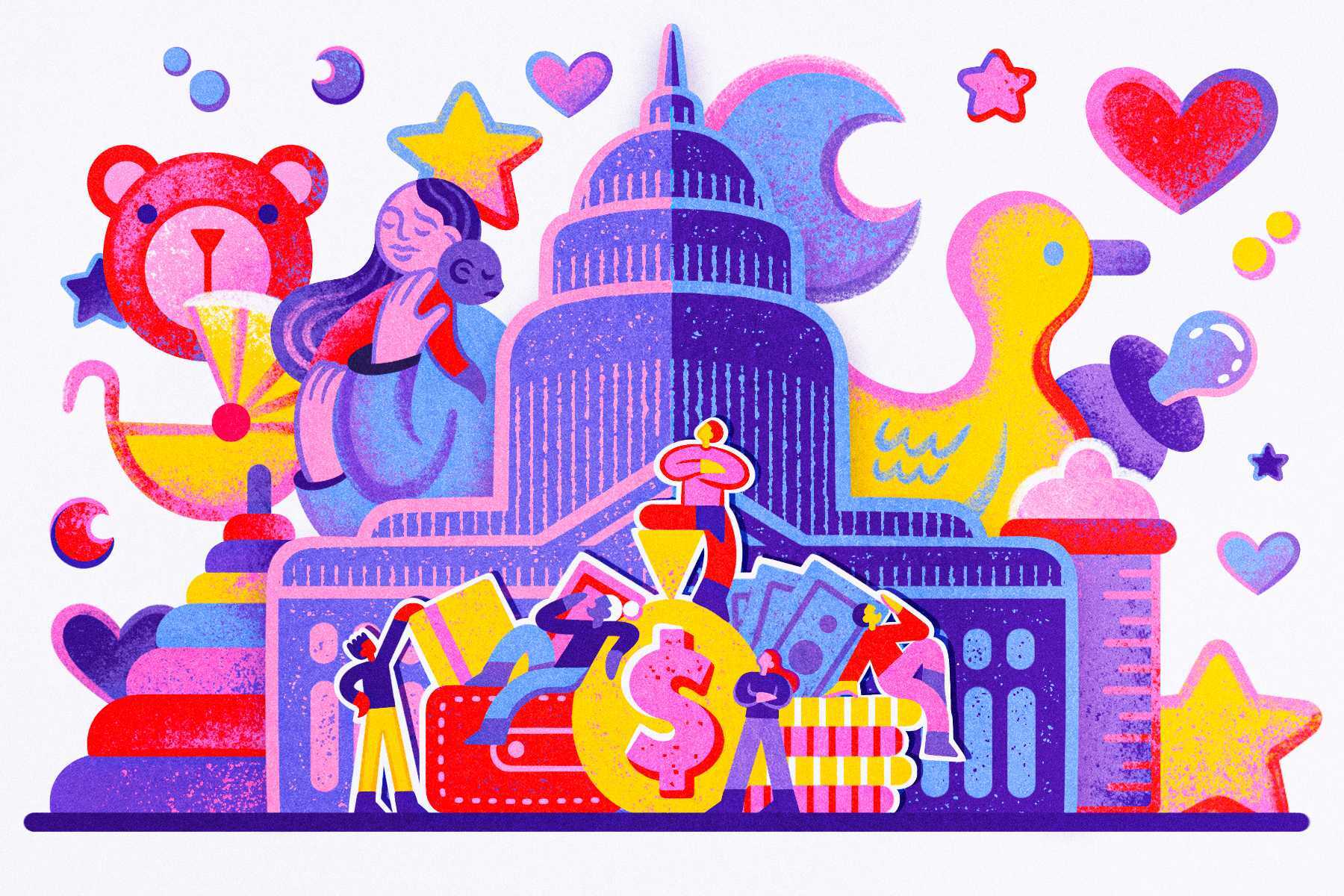
Republicans typically "offered solutions focused on easing specific challenges in the industry, such as lifting regulations to increase the supply of child care options, lowering costs through tax credits and improving child care funding in rural parts of the country."
Democrats advocated for comprehensive reforms like capping costs at 7% of family income and raising wages for childcare workers who currently earn among the lowest salaries nationwide. Low pay has contributed to a steep decline in people willing to pursue childcare jobs, causing a worker shortage, shuttering of daycare centers and higher cost to parents.
When asked if childcare would be prioritized under his administration, Trump gave an incoherent and long response claiming “taxing foreign nations” would somehow resolve these issues; during a CNN debate he dodged questions regarding childcare altogether.
"Trump has embraced tariffs as he appeals to working-class voters who oppose free-trade deals and the outsourcing of factories and jobs... Trump has made a broader — to some, implausible — promise on tariffs: that they can raise trillions of dollars to fund his agenda without those costs being passed along to consumers in the form of higher prices."
"His campaign attacks Democratic nominee Kamala Harris ’ proposals to increase corporate tax rates by saying they would ultimately be borne by workers in the form of fewer jobs and lower incomes. Yet taxes on foreign imports would have a similar effect with businesses and consumers having to absorb those costs in the form of higher prices. - ASSOCIATED PRESS
Jennifer Gerson
Meanwhile, his allies—including J.D. Vance—have controversially suggested that daycare contributes to higher anxiety and depression among children despite evidence indicating that quality childcare enhances long-term success.
To ease parental burdens further, Vance proposed relying on grandparents or family members for childcare—a suggestion that may foster family bonding but falls short of an effective solution for struggling families seeking real support from their leaders.
Vance has also made controversial remarks, such as calling childless people "sociopaths" or “weird cat ladies” and promoting policies to encourage more births.
Vance is a strong proponent of one parent staying home — typically the mother and proposes funding to make up for the lost income – a curious position especially since Republicans are against funding for the poor and needy because they say it creates a dependence on assistance instead of an impetus to find and sustain work.
CHILDCARE TAX CREDIT: A LIFELINE FOR FAMILIES
During the pandemic, child tax credits lifted millions of children out of poverty—the most significant single-year drop in at least 50 years according to census data. However, millions fell back into poverty after the credits expired.
Republicans blocked an effort to pass a bill extending the payments. And Vance – who says he'd like to raise the tax credit to $5,000 – chose to skip the vote in favor of campaigning.
In his first term, Ivanka Trump also played an instrumental role in doubling the credit from $1,000 to $2,000 temporarily; Trump now says he will make it permanent if re-elected.
Harris supports reinstating pandemic-era credits of $3,600 per child and $2,000 for older children along with an additional $6,000 for newborns—a significant increase designed to provide direct relief when families need it most.
AT STAKE IN YOUR STATE
Courtesy of The 74, here’s a breakdown of key referendums and initiatives on ballots across the country that could impact children and families. These states will decide on the following:
- Arizona: Should vocational and technical school students be eligible for state scholarships?
- California: A $10 billion bond for public school infrastructure improvements (Prop 2).
- Colorado: Additional sales tax on firearms and ammunition, with the revenue going to support gun violence victims, $1 million for school security programs and safety upgrades, and $3 million for youth behavioral health programs.
- Florida: A proposal to end nonpartisan school boards by amending the state constitution to require candidates to declare their party affiliation (Amendment 1).
- Massachusetts: Should high school students still be required to pass state exams in English, science, and math?
- New Mexico: Approval of $230 million in funding to upgrade educational facilities, including schools for the blind and deaf.
- Utah:
- A proposal to reduce the state's requirement for spending on education, children, and disabilities (creating a new framework for funding schools).
- Initiative #2: Increase the percentage of investment earnings the state contributes to the State School Fund from 4% to 5%.
Whatever you decide, vote. I'm confident you will cast your ballots with your children and their best interests at heart.